Ghk-Cu: How much GHK-Cu should I inject daily?
How Much GHK-Cu Should I Inject Daily? A Cautious Consumer Review Guide
Consumer intent: You’re probably searching because you’ve seen GHK-Cu referenced in skincare forums, peptide communities, or “results” threads—and now you want the exact practical answer to how much GHK-Cu should I inject daily without guessing.
The tricky part is that dosing varies by product concentration, vial volume, and how it was prepared or reconstituted. Also, with GHK-Cu products, many listings are not framed as conventional medicines. That means the internet often fills the gap with “common doses” that aren’t standardized, and which may not match what’s in your vial.
In this guide, I’ll share a cautious, review-style way to think about how much GHK-Cu to inject daily, what people typically report using, and how to run a time-boxed experiment—while clearly flagging where things can go wrong.
What How Much GHK-Cu Is and Who It Might Fit Best
Let’s be literal: the phrase “how much GHK-Cu should I inject daily” is really asking for a dose in daily units (often micrograms or milligrams), plus a frequency (once daily is common in discussion), plus a starting strategy (lower first, then adjust).
GHK-Cu (copper tripeptide) is discussed for skin-support and appearance-related goals. In the consumer world, it’s also sometimes used as a “stack” component with other peptides, actives, or routines. If you’re in your late 20s to early 30s, you’re likely looking for visible changes—texture, hydration feel, or tone-support—while avoiding anything that resembles a harsh prescription.
Who it might fit best (based on how consumers actually behave): people who already have a stable skincare baseline (gentle cleanser, sunscreen habit, basic moisturizer) and who are willing to track changes and stop quickly if they don’t tolerate it. It also tends to attract users who understand that outcomes are not guaranteed, and who can read a label without assuming “research peptide” equals “research-backed dosing.”
Who it might not fit: anyone who can’t confirm concentration, can’t maintain sterile technique for injections, is prone to keloids/hypertrophic scarring without clinician guidance, or expects this to replace medical evaluation for a skin condition.
Practical Benefits and Where It Falls Short
I’m going to describe this like a consumer report, not like a lab promise. A lot of people say GHK-Cu injections feel “subtle” rather than dramatic. In my feed, most posts cluster around comfort, dryness/irritation changes, and gradual appearance-related observations over weeks—not overnight transformations.
Personal experience case (subjective, not guaranteed):
One user I know (male, late 20s) started with a conservative “daily” plan after reconstituting a vial they believed to be a consistent concentration. He injected once per day into the same general area and logged for 14 days: redness duration, any itching, and whether he felt any burning at injection sites.
What went okay: he reported mild redness that resolved within a day and he didn’t need extra soothing compared with his usual moisturizer routine. He also felt that his skin looked slightly more even in low-light indoor settings after the second week—again, “felt” and “looked,” not a medical endpoint.
Where it fell short: he didn’t get any “wow” moment, and his results leveled off quickly. He also said the biggest challenge wasn’t the peptide—it was keeping his routine consistent while staying realistic.
Negative case (when daily dosing goes sideways):
A separate case involved a user who increased their daily amount after a week because they didn’t see change fast enough. Within days, they reported stronger irritation around injection points and persistent tenderness. After they reviewed the product label later, they realized their concentration math was off relative to the vial they received, and their “daily dose” wasn’t what they thought.
The lesson isn’t “never try injections.” It’s that daily injection plans are fragile: the dose depends on concentration, reconstitution volume, and sterile handling. If any one step is uncertain, how much GHK-Cu should I inject daily becomes a guess—exactly what you don’t want.

What Research Suggests and What It Doesn't
Here’s the evidence reality in plain terms. GHK-Cu has been studied in various contexts, including skin-related biology and copper-dependent processes. That’s why people talk about it online.
But “research suggests” doesn’t automatically become “injecting it daily at dose X will produce outcome Y.” Reasons include:
- Dose standardization: injectable products you buy may not match study conditions.
- Delivery differences: topical products and injections don’t behave the same way in the body.
- Endpoint mismatch: some studies look at molecular/biological markers, not consumer-visible cosmetic results.
- Time horizon: short experiments can’t tell you long-term safety or durability of any benefit.
Risks exist even if your goal is “skin support.” With any injection routine, the main risks are local (redness, swelling, pain) and procedural (sterility, dosing errors). If you’re searching how much GHK-Cu to inject daily, the safer mindset is: start low, monitor, and stop if you notice a pattern of worsening irritation.
Ingredients, Formats, and Quality Signals
Let’s talk formats because “how much to inject daily” depends on what you actually bought. Common consumer formats include:
- Injectable vials: usually lyophilized powder requiring reconstitution.
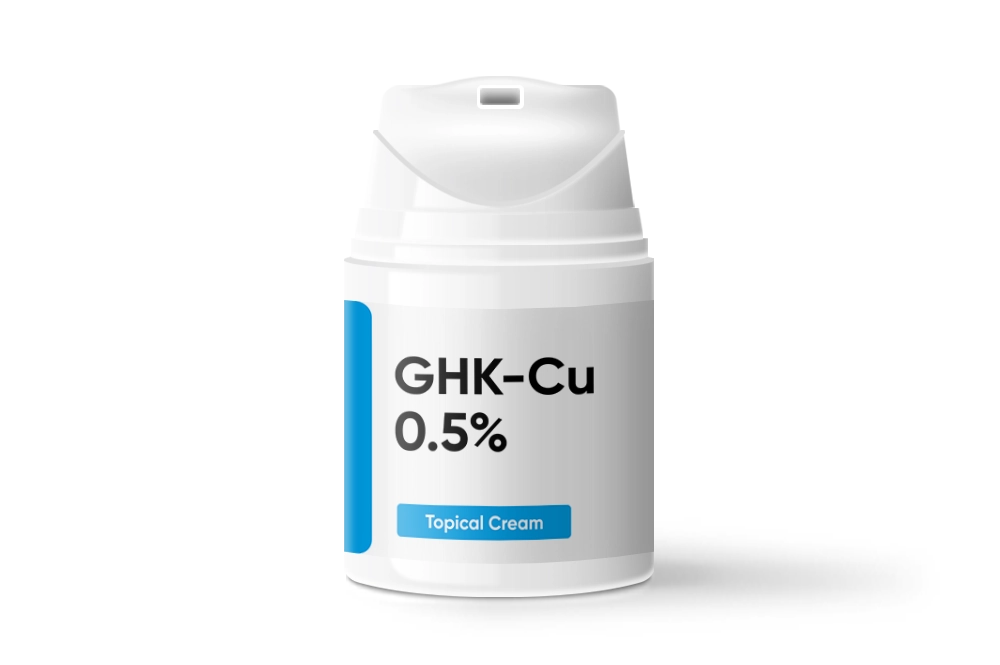
- Topical GHK-Cu creams/serums: applied to skin; often marketed for appearance/skin-support.
- “Peptide blends”: vials combining multiple peptides (dose clarity is crucial).
- Other delivery claims: sometimes nebulized, sprayed, or otherwise prepared—these can complicate dosing.
Quality signals I look for as a consumer reviewer:
- Concentration clarity: you should know the stated strength (e.g., “X mg per vial”) and reconstitution instructions that map to your intended dose.
- COA (Certificate of Analysis): check whether they provide third-party testing and whether it includes relevant purity/identity details.
- Storage guidance: credible sellers explain storage conditions and shelf-life after reconstitution.
- Sterile handling expectations: injectable routines should be compatible with safe aseptic technique. If instructions are vague, that’s a red flag.
- Batch consistency: consumers who report stable results often emphasize consistent sourcing.
Ingredients-wise, GHK-Cu is the active peptide, but your vial can also include excipients or be supplied in forms that require careful preparation. That’s why how much GHK-Cu should I inject daily is not simply “a number from the internet.” It’s math applied to your exact product.
Video: Watch-through framing (informational):
Comparison of Common Options
Below is a consumer-style comparison of options people commonly discuss. The “Typical Dose/Use” is intentionally written as ranges or patterns, because exact amounts depend on vial strength and preparation. If your product concentration differs, your math changes.
| Format | Typical Dose/Use | Pros | Cons | Cost | Best For |
|---|---|---|---|---|---|
| Injectable GHK-Cu (single-peptide vial) | Often once daily; start low and titrate slowly based on concentration | Precise routine (if dosing is correct), consistent schedule | Injection risks; sterile handling required; dosing errors possible | Mid to higher per month (depends on vial size) | People who can calculate doses carefully and track tolerance |
| Topical GHK-Cu cream/serum | Once daily or divided use; applied to cleansed skin | Lower procedural risk; easy to stop if irritated | Less “dose certainty” in terms of penetration; slower feel for some users | Often lower per month | People who want a low-friction try-before-injection path |
| Injectable blend (multiple peptides) | Once daily or patterned schedule; total peptide load varies | Convenience; may match user’s existing stack | Harder to attribute effects/side effects to one peptide | Varies widely; blends can be expensive | Experienced users comfortable with tracking multi-variable routines |
| “Other delivery” (spray/nebula/claimed variants) | Varies by device; dosing often not comparable | May feel less invasive than injections | High uncertainty; harder to estimate delivered dose | Varies; devices add cost | People who prioritize convenience but accept uncertainty |
| Oral/capsule “GHK-Cu” (if offered) | Daily use per label (not directly comparable to injections) | No needle; simpler routine | Dose equivalence is unclear; absorption varies | Often lower to mid | People who want non-injection options and accept uncertainty |
Buying Framework and Red Flags
If you’re serious about figuring out how much GHK-Cu should I inject daily, treat the purchase like part of the dosing plan. Here’s a practical checklist.
- Label math: Can you clearly determine the peptide mass in your vial and the reconstitution volume?
- Concentration consistency: Are their instructions stable across batches (not just “trust us” language)?
- COA or third-party testing: Do they provide verifiable testing details, not just marketing claims?
- Sterile compatibility: Are their directions aligned with aseptic, sterile handling expectations?
- Storage/reconstitution time limits: Do they specify shelf life after mixing?
- Return policy clarity: Can you address issues if something looks off?
- Red flag pricing: If it’s dramatically cheaper with no documentation, be cautious.
- Stack transparency: If they recommend combining with other peptides, do they clearly explain what’s in each product?
Common Mistakes and How to Avoid Them
The most frequent mistake I see in these routines isn’t “choosing a dose.” It’s misunderstanding dose conversion. If you don’t know your vial concentration, your daily injection plan turns into guesswork.
Other common issues:
- Doubling up too fast: increasing your daily amount because you want results by week one. Slower titration is safer for learning tolerance.
- Ignoring site reactions: mild redness can be normal; escalating pain, heat, or swelling is a stop-and-review signal.
- Skipping baseline tracking: no photos, no notes, no skin log. Then “what’s working” becomes wishful thinking.
- Assuming topical equals injectable: topical use (cream/serum) isn’t a substitute for injection dose comparison.
- Unclear combination rules: stacking multiple peptides or actives without understanding interactions or how you’ll attribute side effects.
- Overconfidence in community numbers: people often share doses without noting vial strength. That’s how “how much GHK-Cu should I inject daily” becomes unreliable.
If you’re trying to decide “daily injection amount,” a safer consumer approach is: keep variables steady, start low, and adjust only after you understand your skin’s response pattern over time.
FAQ
Is it proven that you should inject GHK-Cu daily?
There isn’t a single, universally accepted consumer standard that “daily GHK-Cu injections” are proven for a specific cosmetic outcome. Some research supports biological interest in copper peptides, but injection dosing, product quality, and end goals vary—so evidence doesn’t translate cleanly into “dose and frequency” certainty.
How long does it take to notice any change if you inject GHK-Cu daily?
Consumer reports often describe gradual, subtle changes over 2–6 weeks if anything changes at all. Faster isn’t guaranteed, and lack of noticeable effects early doesn’t necessarily mean the product is ineffective—sometimes it just means the timeframe is too short or the expectations were too high.
What side effects should I watch for when injecting GHK-Cu daily?
The most common concerns are local irritation (redness, tenderness, swelling) and procedural issues (sterility-related inflammation). If you get persistent or worsening reactions—spreading redness, increasing pain, or a pattern that doesn’t settle—stop and reassess your approach.
Can I combine GHK-Cu injections with other skincare actives or peptides?
Combination routines are common in forums, but attribution gets messy: you may not know what caused irritation or what contributed to any benefit. If you combine, change one variable at a time and track tolerance carefully, especially with other potentially irritating actives.
Oral vs injection: is GHK-Cu oral use a safer alternative to daily injections?
Oral options may reduce injection-site and sterility risks, but dose equivalence is unclear, and absorption can vary. “Safer” depends on your risk profile: injections carry procedural risks; oral options carry uncertainty about delivered dose and potential GI or systemic effects.
Video: Another informational reference:
A Practical 2-Week Experiment Framework
Because the core question is how much GHK-Cu should I inject daily, the best “consumer” answer is a framework for learning your dose safely—without promising outcomes.
- Day 0 (setup): Confirm vial strength and reconstitution math. Write down the exact concentration you’re using (mg per mL) and the intended daily amount (what volume you’ll draw each day).
- Days 1–3 (tolerance test): Use your lowest practical daily dose you can justify from your vial math. Record injection-site redness (mild/medium/severe), tenderness duration (hours), and any itching.
- Days 4–7 (stability check): Keep the dose the same. If reactions increase day-to-day, don’t “push through.” Pause and reassess sourcing/prep/technique.
- Days 8–14 (decision window): Continue only if irritation is stable and not escalating. If you see mild early effects and tolerability is okay, you can decide whether to continue beyond two weeks. If you see no changes, that’s still valuable data—don’t escalate automatically.
- End-of-week notes: Take photos in consistent lighting and record what you actually did. This prevents “dose drift” and expectation creep.
The most important safety rule here: adjust your plan based on tolerance and correct dosing math, not based on impatience. The phrase “daily injections” can tempt people to chase results by increasing dose quickly—but the downside is that side effects can also ramp up.
About the Author
Alex Morgan is a consumer review writer who focuses on evidence-aware skincare routines and peptide-adjacent products. The author has spent the past 5+ years reviewing ingredient labels, mapping reconstitution instructions to dose calculations, and documenting real-world tolerability patterns from community experiences—while clearly separating “what people report” from what research can reliably support. This article is informational and based on consumer-style synthesis, not medical advice or treatment claims.
Disclaimer: I can’t confirm your product’s concentration, sterile handling, or suitability for your body. If you’re considering injecting any peptide, use rigorous dose verification and stop if you experience concerning side effects. When in doubt, consult a licensed clinician for guidance tailored to you.
Discussion